

One took photographs of the hell-on-Earth he witnessed on battlefields during World War II.
The other snapped photos of death and destruction of a different kind – on the often dangerous highways and city streets in and around southern California in the 1940s and ‘50s.
Both rose out of the mayhem to become key figures in documenting Disney history.

Mell Kilpatrick was one of those nose-for-the-news guys.
Armed with his trusty Weegee camera — a cumbersome, box-shaped device with a large flash bulb attachment on its side — Mell was more known for taking photos of deadly fires, gory crime scenes and horrific car accidents as chief photographer for the Santa Ana Register than he was for snapping shots of a more sedate, if hectic, theme park construction site.
Mell and his talents had become known to Walt Disney when Mell allowed Disney’s staff photographers access to his home darkroom.
When Kilpatrick was assigned to take photos of Disneyland — literally from the time the orange trees were leveled in 1954 to opening day about a year later — he became one the park’s main construction chroniclers in the process.
His expertise with a camera, as well as his willingness the stretch the boundaries of his craft, earned him a reputation as a “photographer of the impossible.”
“Yale was a great practitioner of experimental photography, in particular his three-dimensional and infrared work,” said Bobbi Baker Burrows, director of photography for LIFE Books, who also was an editor at LIFE Magazine for 40 years.
According to Maren Stange, in writing for Contemporary Photographers, Joel “relished assignments that required the use of special arcane equipment, carefully orchestrated setups and special effects.”
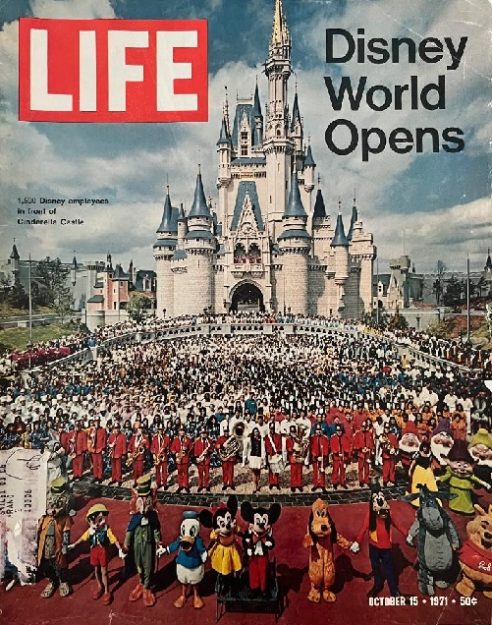
One of those “carefully orchestrated setups” was the iconic “mob-scene” photo that appeared on the cover of LIFE for its Oct. 15, 1971, edition.
The idea of the photo came from the fertile imagination of then-Walt Disney World chief press agent Charlie Ridgway.
“At the time we were getting ready to plan for the opening, I suggested we do a mob-scene picture and we carried on from that point,” Ridgway told me in 2013.
“We assembled as many cast members as we could get there. We actually had 5,000 employees at the time and we were able to gather about 3,000 for the photo [the LIFE cover said there were 1,500 in the shot].”
Joel “can claim a photographic coup with the group portrait of the Disney World employees,” Stange added.
Disney Legend Tom Nabbe COULD have been among the throng in the now-legendary photo, but, as monorail supervisor, he opted to skip the photo and tend to his duties at the monorail station.
“I sent the Magic Kingdom monorail crew that was working that day to the photo shoot, and I worked the Magic Kingdom monorail station until they returned,” Nabbe said.
Among Joel’s long list of photographic triumphs were photo essays of Salvador Dali, the Radio City Music Hall Rockettes, a young John F. Kennedy in Massachusetts running for Congress in 1946, and stunning photos of The Doors rock band in concert at the fabled Fillmore East in New York City.
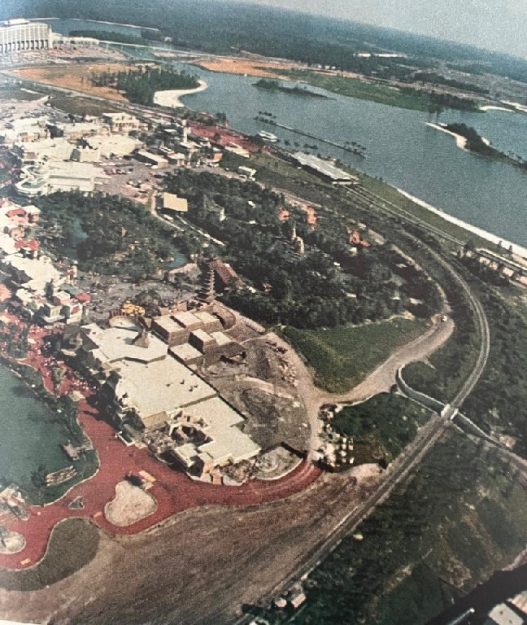
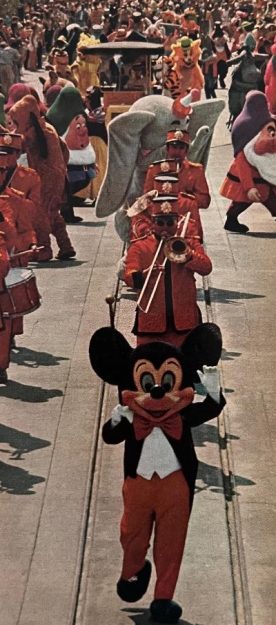
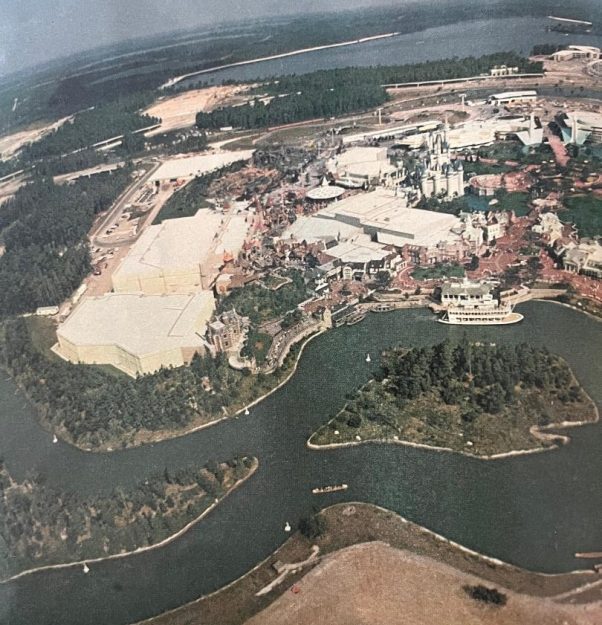
Joel not only did the LIFE/Disney cover photo, but he also took several “action” shots inside the Magic Kingdom for the edition.
There’s a photo of Mickey and Co. marching down Main Street USA during the afternoon parade; broad panoramic shots of the Magic Kingdom from hundreds of feet above; a close-up shot of long-departed Mickey Mouse Revue, and photos of guests interacting with a wide range of Disney characters [including Giuseppi from The Aristocats and Jose Carioca from The Three Caballeros].
There’s even a full-page photo of what LIFE called the “gloomy crooner” … Big Al from the Country Bear Jamboree.
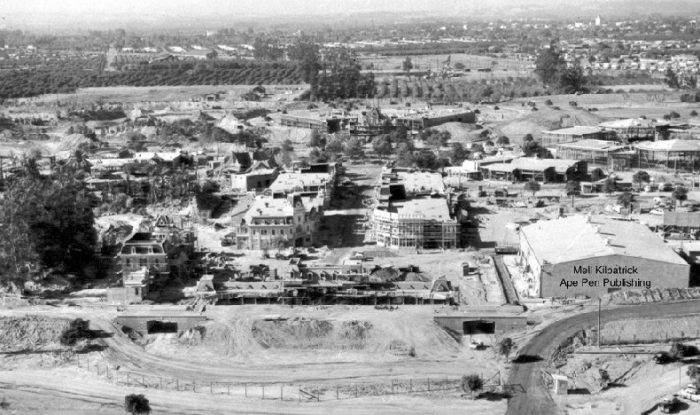
When Kilpatrick died in 1962, he left behind a treasure trove of photos in his darkroom. After his death, his wife Kathryn, Carlene’s grandmother, locked the door to the darkroom and those photos and negatives sat, undisturbed, for decades.
During that time, Carlene and her family moved around, from Maryland to Colorado to Idaho. After her family moved back to California when she was 16, she made it a point to visit her grandmother’s home as often as possible.
Then came what can best be described as a turning point in Carlene’s life.
“A little prior to when my grandma passed, she said I could have everything in my grandfather’s darkroom, all the photos,” Carlene remembers. Of significance was the fact that “my grandfather had the foresight to have a written contract to retain the rights to the images he took,” Carlene said.
She wouldn’t come to realize the magnitude of what was behind that locked darkroom door until she began the painstaking task of actually going through the dozens of boxes.
“So many negatives,” she said. “Boxes and boxes of negatives of everything, from Disneyland to car crashes. You kind of saw Disneyland mixed in there, but you really didn’t know what it was.”
Thankfully, her grandfather had a filing system.
“Each box had a slip attached to it. There would be like: ‘The Mark Twain’ or ‘Walt and Engine No. 2.’ Eight to 15 pictures of each … There were photos of the Andrews Sisters, Fess Parker. There would be tons of them, but you really didn’t know what exactly you were looking at.
“It was overwhelming, dealing with so much.”
Years later, Carlene founded Ape Pen Publishing, where she put many of those photos to good use, chronicling Disneyland’s storied past through her grandfather’s camera lens in a series of books.
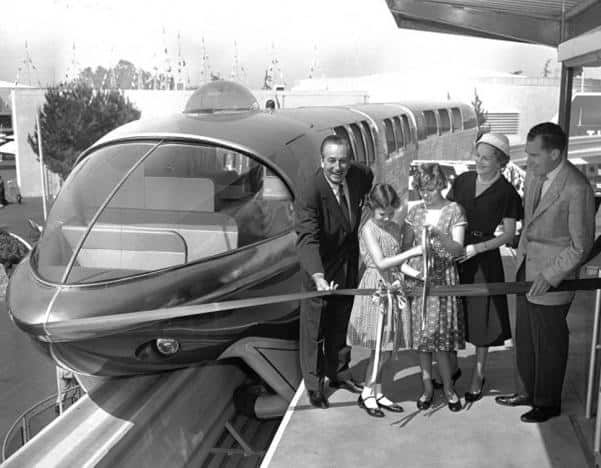
Mell was on the monorail station platform to snap photos of then-Vice President Richard Nixon and his family trying to cut the ribbon to officially get the monorail off and rolling.
Of historical significance: The man at the controls of the monorail as it pulled into the station for the ceremonies was none other than Bob Gurr, who not only designed the monorail, Matterhorn Mountain and the submarines, but was called on to serve as the monorail pilot during that eventful first day.
In Gurr’s book, Design: Just For Fun, which Carlene Thie helped him publish, Gurr describes how he and Walt Disney inadvertently “kidnapped” Nixon during that inaugural spin around Disneyland.
With Gurr at the controls and Walt and the Vice President on board, Walt gave Gurr the order: “Let’s go!” … leaving a stunned group of Secret Service agents standing at the station.
Not only that, but before the train pulled into the station after its tour of Disneyland, Walt ordered Gurr to “Go again!” much to the agents’ chagrin.
Chuck Schmidt is an award-winning journalist and retired Disney cast member who has covered all things Disney since 1984 in both print and on-line. He has authored or co-authored seven books on Disney, including his On the Disney Beat and Disney’s Dream Weavers for Theme Park Press. He has written a regular blog for AllEars.Net, called Still Goofy About Disney, 2015.







I love these old photos.
Another excellent article, Mr. Schmidt. You always take me there!
I was there as a child when they were building space mountain and one of the first rides was Dumbo the flying elephant. There were negotiations going on about how much land Disney could build on. My father and one of the senators fought to have Disney limited the land usage to be required for nature. Thankfully they were able to do this saving thousands of acres for wildlife. I also remember that they were discussing the Contemporary Hotel having modular rooms that were able to be pulled out from the building structure to make repairs. Obviously this project never worked out. Sadly Disney has lost it’s shine to greed. This will be my last year getting an annual pass.
I tried to send a text and pictures about the Disney World Gondola Sky ride in response to Bob Gurr’s article about things that aren’t there anymore.
My former wife and I were there on our Honeymoon,I June 1972.
I’m going to wait to see if this text goes through, before I try to resend those pictures. The pictures are of us riding on the Gondola ride and pictures of us at Cinderella’s Castle, back when there were trees in front of the castle, partially blocking the view of the original castle. Those pics are amazing.