

The New York World’s Fair ended its two-year run on Oct. 17, 1965, almost 60 years ago.
The international exhibition was considered a success, from an entertainment standpoint, but when all was said and done, it never lived up to financial expectations.
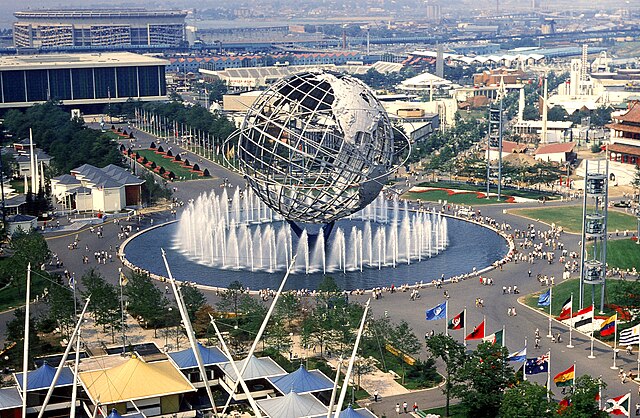
A total of 51,545,893 people attended the Fair, which was fewer guests than were projected.
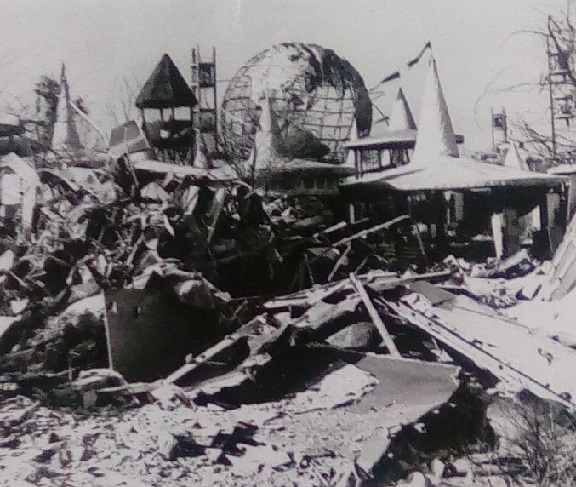
Once the Fair ceased operating, it didn’t take very long before the demolition of dozens of pavilions began, which was a shame, considering many of the structures were designed and built by some of the world’s most prominent architectural firms.
Pavilion sponsors were given a mere 90 days to tear down their exhibits.
Things were decidedly different when it came to the four exhibits presented by the Walt Disney Company. It seems Walt Disney had an exit strategy … and a plan.
“Think about it this way,” Disney Legend Marty Sklar told me in 2010. “In 1959, Disneyland added Matterhorn Mountain, the submarine voyage and the monorail. Disneyland was set for years. Walt turned all his attention to the World’s Fair.”
Behind the scenes in the early 1960s, Walt’s trusted creative staff – known then as WED Enterprises – was working overtime to develop new forms of theme park entertainment, specifically, realistic-looking Audio-Animatronics figures and new attraction conveyances.
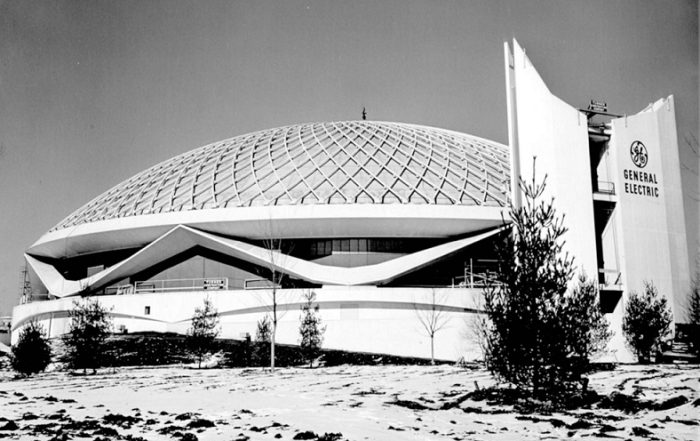
Those innovative creations formed the backbone of Disney’s four World’s Fair shows: Great Moments with Mr. Lincoln in the Illinois state pavilion, which featured a life-like Abraham Lincoln figure; the boat ride system used for the “it’s a small world” attraction; the menacing dinosaurs and cavemen who were viewed by guests while seated in Ford Motor Company automobiles thanks to the PeopleMover ride system; and the time-traveling family of figures extoling the virtues of electricity in General Electric’s Carousel of Progress, which took place in a revolving theater.
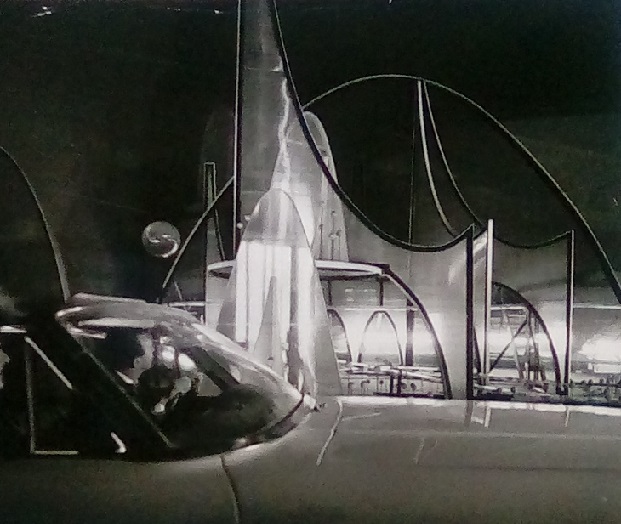
Walt knew that if these shows were a hit with often demanding East Coast audiences, then he’d have an influx of great new attractions for Disneyland after the Fair closed.
“What we didn’t realize at the time was that Walt had written into each of the contracts of the World’s Fair shows was that Disney owned them,” Sklar said.
“Every one of those shows came back to Disneyland … Basically, all those new attractions [introduced at the Fair but bound for Disneyland] were paid for” by corporate sponsors. Not only that, but once word got out about how cutting edge each of the four Fair shows were, Walt and his staff couldn’t get them up and running at Disneyland fast enough.
The Great Moments with Mr. Lincoln show was the first of the Disney Fair attractions to make it to Disneyland.
In 1965, during the Fair’s second season, Great Moments with Mr. Lincoln opened in the Main Street Opera House in Disneyland’s Town Square, giving what Marty called a “coast-to-coast presentation.”
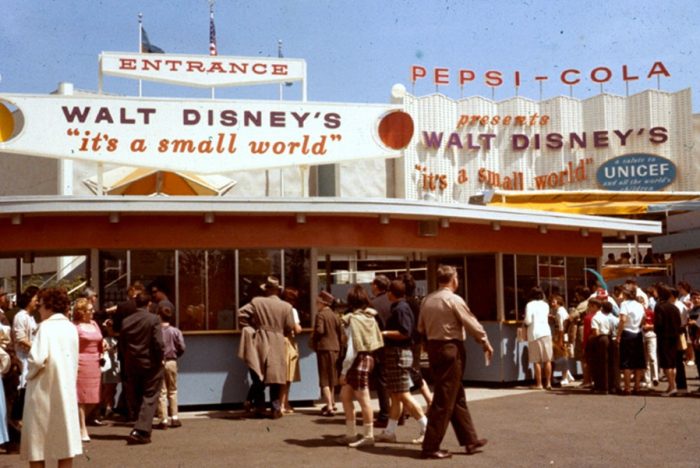
In 1966, “it’s a small world” debuted in a now-iconic show building in Fantasyland, while Carousel of Progress made its Disneyland debut in 1967.
Some of the dinosaurs used in the Ford’s Magic Skyway attraction took up residence in late 1966 in dioramas, which still can be viewed while riding the Disneyland Railroad. The dino display in the railroad diorama included a Tyrannosaurus battling a Stegosaurus and proud parents watching their bouncing baby reptiles hatching from eggs.
Carousel of Progress enjoyed a relatively brief run in Disneyland, opening in 1967 and closing in 1973. The version in Walt Disney World opened in 1975 and is still going strong.
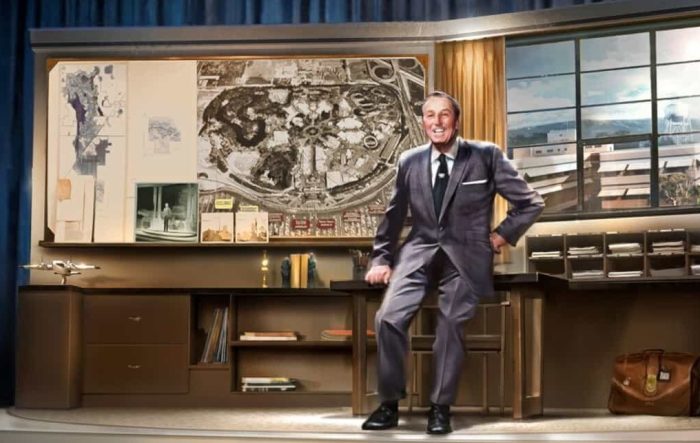
In fact, it was recently announced that WDW’s Carousel of Progress will be adding a Walt Disney Audio-Animatronics show to its presentation, similar to the one currently enthralling guests at Disneyland.
For those with long memories, the Carousel of Progress building in Disneyland served as a precursor of things to come in Florida.
“What Walt decided was that we should do a model of his concept for EPCOT, so we built this big model that was upstairs on the second floor of the Carousel building,” Marty said. “That model fascinated Disneyland guests for five years.”
The depiction of EPCOT, which was based on Herb Ryman’s conceptual illustration of Walt’s city of the future, can still be seen today along the PeopleMover route in Tomorrowland in the Magic Kingdom at Walt Disney World.
While all of the buildings used for Disney’s four Fair shows were demolished, the ride systems and intricate Audio-Animatronics figures were carefully loaded onto 18-wheelers and driven cross-country, where they would find their new homes.
“Everything from the Fair was transported back to California in trucks,” remembered Marty, “even the troughs that were used in ‘it’s a small world’.”
Most people, including many on the company payroll, also didn’t realize that something even more elaborate was going on behind the scenes.
“Walt was using the Fair as a stepping-stone to build Walt Disney World,” Marty said. “In fact, around the same time the Fair opened, we were buying the first pieces of property in Florida.”
Not only were the Fair shows paid for, but they were guaranteed hits for Disneyland, having been tested and given a rousing stamp of approval by an always-demanding East Coast audience.
All or part of the four World’s Fair shows eventually made their way to Florida and Walt Disney World. In fact, just about the time the World’s Fair was opening in 1964, a small group of Disney, including Walt’s brother Roy and attorney Bob Foster, had begun to purchase land in the Orlando area on which they’d eventually build Walt Disney World.
Carousel of Progress opened in 1975 in WDW’s Tomorrowland and remains a Magic Kingdom mainstay, while the Great Moments with Mr. Lincoln show morphed into the expanded Hall of Presidents Magic Kingdom presentation.
More sophisticated dinosaur figures, modeled after those used in Ford’s Magic Skyway, took center stage in a number of Disney park shows, including Ellen’s Energy Adventure in EPCOT and Dinosaur! in Disney’s Animal Kingdom.
And “it’s a small world” has been a Fantasyland staple since WDW opened in 1971.
Speaking of “it’s a small world,” there was an eye-catching metal sculpture outside the World’s Fair pavilion called Tower of the Four Winds. It was created by Disney Legend Rolly Crump and could be seen from just about any section of the Fair grounds.
Unfortunately, the fate of the tower remains a mystery. Some folks speculate that it was dismantled and thrown into a nearby river.
Chuck Schmidt is an award-winning journalist and retired Disney cast member who has covered all things Disney since 1984 in both print and on-line. He has authored or co-authored eight books on Disney, including his On the Disney Beat, The Beat Goes On, Disney’s Dream Weavers and his latest, Marty, Mickey and Me, for Theme Park Press. He has written a regular blog for AllEars.Net, called Still Goofy About Disney, since 2015.






Great article Chuck